Manifestation Crystals: Where to Start
On this page 7
Manifestation crystals are stones people keep nearby — on a desk, in a pocket, on a vision board or altar — as a physical reminder of an intention, in the same spirit as a written affirmation or a photo on a vision board. There's no verified mechanism by which a crystal changes an outcome, and this is offered as entertainment and reflection, not as a claim about what a stone can do for you, physically or otherwise. No crystal makes any health claim here, and none should.
If you're not sure about any of it — plenty of people who use crystals aren't either — that's a completely normal place to start from. The value most people report isn't mystical proof, it's a tactile object that holds their attention the way any meaningful object can.
Crystals people commonly reach for
Clear quartz — often described as an all-purpose stone, used broadly across different kinds of intentions.
Citrine — frequently associated with the money and abundance side of manifesting, kept on desks or near a wallet.
Rose quartz — commonly tied to self-worth and relationships, often part of love-focused practices.
Green aventurine — associated with opportunity and new starts, popular for career-related intentions.
Black tourmaline — often described as grounding, kept near a workspace during a stressful stretch.
These associations come from folk tradition and popular use, not from any tested property of the stones themselves. Different sources will give you different meanings for the same crystal, which is normal for this kind of symbolism.
Matching a crystal to what you're working on
If money is the current focus, citrine tends to be the one people reach for first. For a relationship-related want, rose quartz is the common pick. For a job change or new venture, green aventurine shows up most. None of these pairings are fixed rules — plenty of people use clear quartz for everything and skip the matching step entirely, which works just as well.
How people actually use them
Held during a journaling or affirmation session, kept in a pocket during the day, placed on a vision board or small altar, or set beside a bed at night. The stone acts as a physical anchor — something to hold or glance at that brings a specific want back to mind, the same job a written affirmation or a photo does, just in object form.
Starting a small collection without overspending
One or two stones tied to what you're actually working on right now is plenty to start. There's no need to build a large collection before the practice "counts" — a single clear quartz or citrine, used consistently, does more than a shelf of stones picked up on impulse and never touched again.
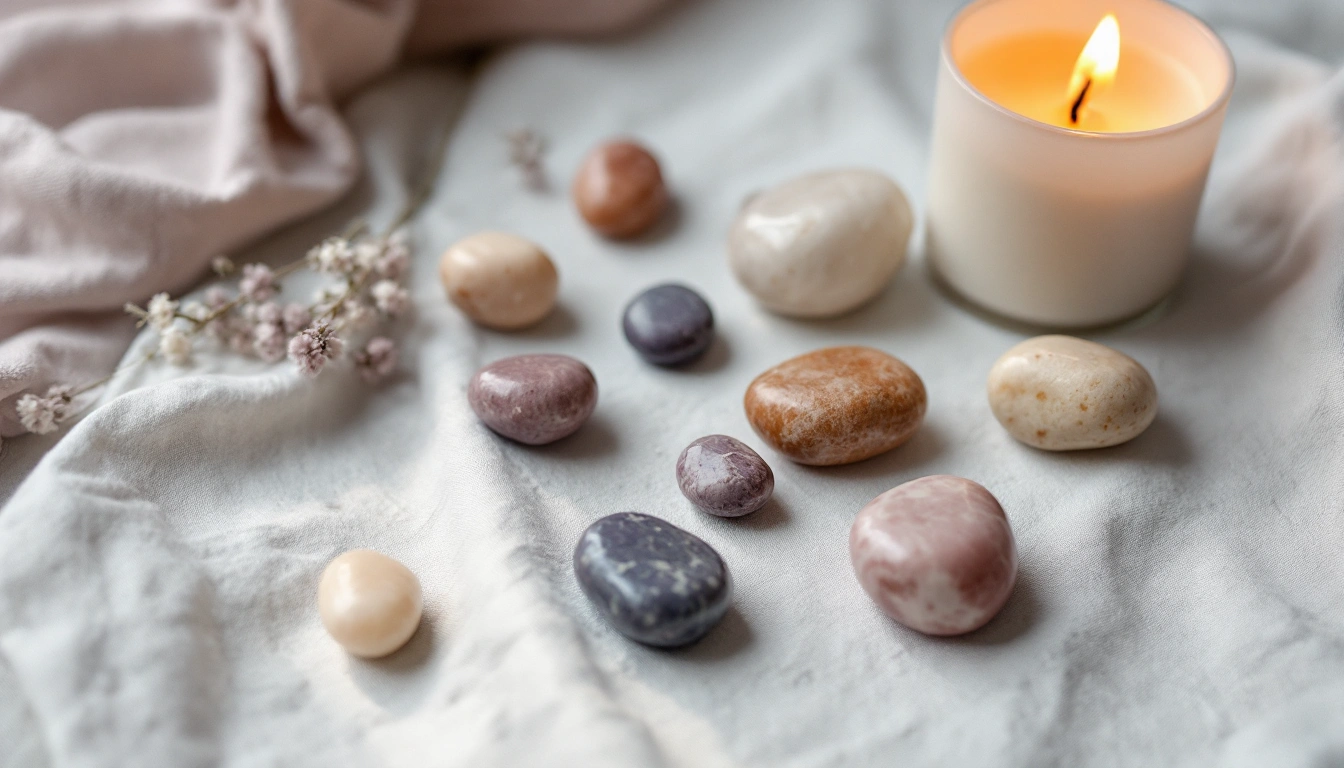
A small starter crystal set is a reasonable way to try a few at once and see which ones you actually reach for, rather than buying pieces one at a time and guessing.
Pairing crystals with a daily practice, so the stone has an actual routine to sit inside instead of just sitting on a shelf, is what the starter quiz's prompt pack is built to give you.
Caring for a first crystal
Most starter stones just need an occasional wipe with a soft cloth and a spot out of direct sun if the color is delicate. Some people rinse a new stone under water and set an intention for it before first use — a small ritual, not a required step. There's no correct way to "cleanse" a crystal that changes what it does; treat any cleansing ritual as part of the ceremony you find meaningful, not a technical requirement.
If you're skeptical
You don't need to believe a stone has an active property for it to be a useful part of a practice — treat it as you would a specific pen you like writing with, or a candle you always light for this. The object's job is to focus your attention, and that job works whether or not you believe in anything beyond it.
What crystals aren't
Not a health treatment, not a substitute for medical or mental health care, and not a guarantee of any financial or personal outcome. If a page or seller claims a crystal treats a condition, that claim isn't something this site makes or supports — crystals here are a reflective tool, nothing more.